Which day trading approach works better for beginners, a rule-based futures and forex strategy or chasing volatility in crypto
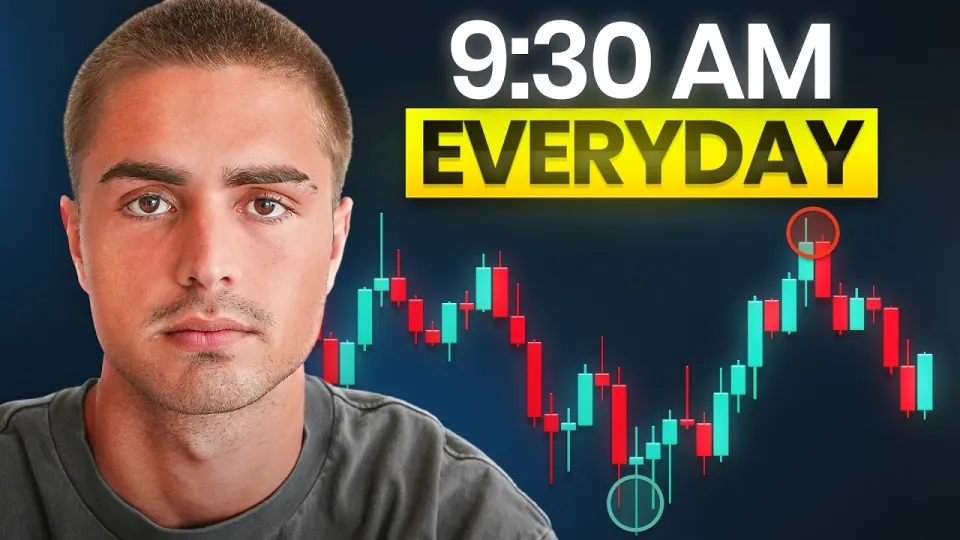
Video: My UPDATED Day Trading Strategy (2026)
Want articles like this for your own video to promote it on YouTube and Google? Order them through the Telegram bot @sat_sit_bot. The bot writes and publishes the articles itself (with your YouTube video embedded) on popular topical websites (no ads). Free trial — 50 articles.
Key takeaways
- TJR's updated framework is built on marking key levels first, then waiting for a reaction instead of predicting direction.
- Confirmation is treated as a level reaction plus structure, not blind entry on the first touch of a zone.
- Risk control comes before setup quality: fixed risk per trade and a daily stop-out limit.
- The strategy is designed for liquid futures and forex pairs, where sessions and volatility are predictable.
- Most retail day traders lose money, so position sizing and journaling matter more than any single indicator.
Day trading works better as a rule-based process on liquid futures and forex than as a hunt for the next big crypto move, because the edge comes from repeatable levels, confirmation and strict risk limits rather than from volatility alone. TJR's updated day trading strategy builds exactly that: mark the levels, wait for the reaction, size the position, and stop when the plan says stop. You can see the full framework the channel sells as a structured program through the trading blueprint, which is the main resource linked under the video.
What the updated day trading strategy actually changes
The core of the update is sequencing: context first, level second, entry last. Instead of scanning dozens of charts for something that looks explosive, the trader picks a small watchlist of liquid instruments, marks the levels that matter before the session opens, and only acts when price does something specific at those levels.
In practice the workflow looks like this:
- Define the session and the instruments in advance, so decisions are not made in the heat of the moment.
- Mark higher-timeframe levels, then drop to the execution timeframe.
- Wait for a reaction at the level rather than a touch of it.
- Enter with a predefined stop and a predefined target, sized so a single loss does not damage the account.
- Stop trading after a set number of losses or a daily drawdown limit.
The strategy is deliberately boring. That is the point: the fewer variables, the easier it is to measure whether the process works.
Why futures and forex suit a rules-based approach better than crypto
Liquid futures and major forex pairs give a day trader something crypto often does not: a predictable session structure. Index futures and currency pairs have defined open, close and overlap windows, and volatility tends to cluster around scheduled events. That makes level marking and time-of-day filtering meaningful.
Crypto trades around the clock, which sounds like an advantage but usually removes the structure that keeps a discretionary trader honest. Without a session boundary, there is no natural point at which to stop, and the temptation to take one more trade after a loss grows. A rule-based plan on a defined instrument list is easier to review, easier to journal and easier to repeat.
That does not make crypto untradeable. It means the same level-and-confirmation logic needs an extra layer of discipline: fixed trading windows, hard daily loss limits and a smaller position size to absorb wider ranges.
How confirmation is defined and why it matters
Confirmation is the part most traders skip, and it is the difference between a plan and a gamble. A level by itself is just a price; confirmation is evidence that other participants are responding to it, such as a rejection wick, a failed break, or a shift in short-term structure after the level is tested.
The practical rule is to separate the two decisions. First decide whether price is at a level worth trading. Then decide whether the reaction is strong enough to justify risk. If the second condition is not met, there is no trade, no matter how clean the chart looks. This single filter removes a large share of low-quality entries and makes the journal far more useful, because every logged trade has a clear reason attached to it.
Risk rules that keep the strategy alive
Risk management is not a separate topic from the strategy; it is the strategy. A day trading plan that produces a 55% win rate still fails if one oversized loss wipes out ten good trades.
The non-negotiables are simple:
- Risk a fixed, small percentage of the account per trade, and recalculate it after every change in balance.
- Set a daily loss limit and a maximum number of trades, and treat both as hard stops.
- Size the position from the stop distance, not from the amount of margin available.
- Log every trade with the setup, the confirmation and the outcome, so patterns in mistakes become visible.
A trading journal such as Tradezella, which the channel recommends, makes the review step mechanical rather than emotional. Funded-account programs from Alpha Futures, Lucid Trading and Tradeify are also linked in the description, and they impose their own drawdown rules, which is another reason to practise fixed risk before paying for an evaluation.
Common questions traders raise about this approach
Many viewers ask whether confirmation means a candle close or simply a reaction at the level. The honest answer is that both exist, and the choice should be fixed in advance. A close beyond the level gives a slower but cleaner signal; an immediate reaction gives a faster entry with more false positives. What matters is consistency, because a mixed definition makes results impossible to evaluate.
A second recurring doubt is whether the strategy is too simple to work. Simplicity is not the same as ease. Marking levels is easy; waiting through three sessions without a valid setup is not. The difficulty sits in execution, not in the rules.
A third theme is the comparison with people who claim huge returns from a single crypto position. Those stories describe outcomes, not processes, and they say nothing about the risk taken or the number of similar bets that failed. A repeatable day trading method is judged on expectancy over hundreds of trades, not on one screenshot.
Useful links
- TJR trading blueprint — the structured system for becoming a consistently profitable trader.
- Indicators used daily — the toolkit shown on the charts.
- Funded account raffle — entry form for the giveaway.
- Alpha Futures — funded accounts with a discount for viewers.
- Lucid Trading — funded account evaluations at a reduced price.
- Tradeify — another funded account option with a viewer discount.
Final thoughts on building a repeatable trading process
The updated framework from TJR is less about a secret setup and more about removing decisions: fixed instruments, pre-marked levels, a defined confirmation, a fixed risk per trade and a hard stop for the day. Futures and forex fit that structure because their sessions create natural boundaries, while crypto requires extra discipline to avoid overtrading. The realistic expectation is not a fast doubling of an account but a slow, measurable improvement in execution over hundreds of logged trades. Anyone testing the approach should start small, journal everything, and treat the blueprint as a reference framework rather than a guarantee. The breakdown comes from the TJR channel, which regularly publishes updated strategy walkthroughs.
Questions & answers
Is this day trading strategy suitable for a complete beginner?
Yes, but only with a demo or very small account first. The rules are simple to understand, yet the hard part is waiting for confirmation and respecting a daily loss limit. Beginners should spend several weeks logging trades before risking meaningful capital.
Does confirmation mean waiting for a candle close?
It can, but the definition must be fixed in advance. A close beyond the level is slower and cleaner, while an immediate rejection at the level is faster and produces more false signals. Pick one definition and keep it consistent so your journal shows real data.
Can the same approach be used for crypto instead of futures and forex?
The level-and-confirmation logic transfers, but crypto trades 24/7, so you must impose your own session window and hard daily stop. Position sizes usually need to be smaller because ranges are wider and volatility can spike without warning.
How much should a trader risk per trade with this method?
A common rule is a small fixed percentage of the account, recalculated after every balance change, with a daily loss limit and a maximum trade count. Position size should be derived from the stop distance, not from available margin or leverage.
Source: My UPDATED Day Trading Strategy (2026) · Markdown version